
Understanding the Mechanics of the Game Behind Cash or Crash Live
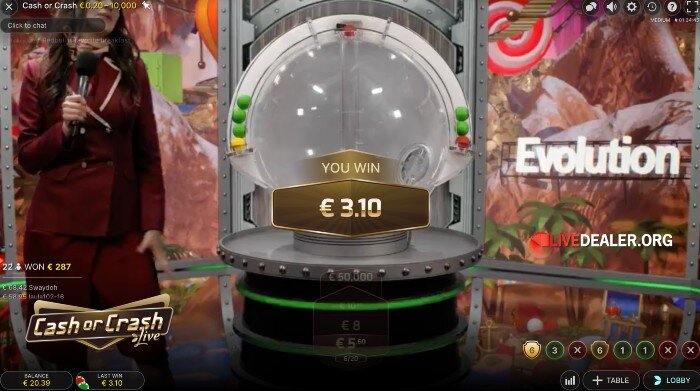
The game Cash or Crash Live carves its own space in the live game show world https://cashorcrashcasino.com/. Its magic is found in a strong combination of stage show and game rules that transforms every round into a test of your nerves. This is not a passive spin of a roulette wheel. In this game, you take the driver’s seat, making decisions that directly control what you win. The concept draws you in with an increasing multiplier, then dares you to grab it before a hidden “crash” resets everything. To get the most out of the game, you need to look past the lights and understand its actual mechanics. Let’s break down the stages, the presenter’s part, the math behind the risk, and what players can realistically do to steer through the excitement.
The purpose of the on-air host and RNG
The live host is more than just talk. They set the game’s emotional pace. While they can’t affect the result, they expertly build suspense. They shout out the climbing multiplier and provide live updates on what percentage of the crowd is cashing out at each level. That social cue can mess with your head. But remember, the host operates independently of the game’s engine: the Random Number Generator (RNG). The crash point for each stage is established by a certified RNG the instant the stage begins. This assures fairness and total unpredictability. The host has no clue when the crash will happen. Their job is entertainment. The RNG’s job is certifiable fairness. This combination blends transparent live action with provably random results.
Statistical Foundations and Risk
Let’s examine the data that drive the game. The multiplier for every round is derived from a set probability distribution. Common, lower multipliers for instance 1.2x or 1.5x are very likely to occur. Sky-high multipliers are possible, but are exponentially less likely. This design maintains the game fair. The frequent, small crashes pay for the infrequent, massive possible wins. The player payout percentage is a expected percentage across millions of rounds. In a single gaming session, the variance are extreme. You’re not playing against the casino in a conventional sense. You are making decisions against a hidden, random number. Remember these points:
- Isolated Stages: Each level’s crash value is a separate event. A crash of 1.2x in round one gives no info about round two.
- No Forecasting Ability: The random number generator ensures no predictable sequences. Previous crashes or large wins do not affect future rounds.
- House Advantage: The system incorporates a house advantage, as reflected in the publicly stated RTP from the developer.

Conclusion: A Blend of Luck and Choice
Cash or Crash Live is a captivating combination of absolute chance and intentional selection. Its structure are structured to craft a tale of rising tension, fueled by a transparent RNG and animated by a engaging presenter. Defining victory as a enjoyable and likely lucrative session depends on several factors. It’s not so much about predicting the random and instead about understanding how the game is constructed. It calls for controlling your bankroll with restraint and controlling the psychological urges the game expertly provokes. By mastering its stages, acknowledging its mathematical structure, and adhering to a personal approach, you can change your perspective. You go from confused speculation to informed involvement in a exceptionally intense live game show.
Methodological Structures and Player Psychology
No approach can defeat the inherent randomness. But you can use systematic techniques to handle your funds and your mental state. The central dilemma is a exchange. Do you secure fixed returns, or shoot for exponential growth? Players often use techniques like the “Fixed Cash-Out.” In this case, you choose ahead of time to settle at a specific multiplier, say 2x, in every phase. This aims for stable, small gains. The opposite is the “Let It Ride” style, where you gamble several rounds for a chance at a monster payout, acknowledging that losses will occur. A more strategic approach is the “Percentage Bankroll” method, where you change your stake based on your present profits. The key aspect, though, is in your psychology. Can you resist the “greed factor” when the payout soars? Can you avoid frustration after an initial failure? Your most powerful tool is setting firm guidelines for yourself before the game even launches.
Common Pitfalls to Avoid
Look out for a few common errors. The most harmful is “chasing” a crash. This signifies recklessly boosting your bet after a loss, which violates the process’s stage-independent design. Another misstep is believing in the “hot hand” fallacy, assuming a streak of large ratios is probable to persist. Allowing the commentator’s talk or the actions of other participants distract you from your own pre-set plan is widespread. Also, don’t misread the areas. The Amber and Red Zones are not obstacles to conquer. They are warnings that the hazard has increased. Starting any round without a defined objective transforms the game from a series of choices into a pure emotional rollercoaster. That experience hardly ever concludes favorably.
The Primary Purpose and Core Mechanics
The objective of Cash or Crash Live is straightforward on the appearance. You need to choose when to exit a growing multiplier before a secret “crash point” terminates the round and removes your profits for that level. Every game starts with players making bets. A rocket then begins its flight, and a multiplier starts ticking up from 1x. The journey has various levels. Prior to launch, a unknown crash multiplier is set for each stage, secret from all players. As the value increases, every player opts to hit “Cash Out,” fixing that multiplier on their wager, or to continue. If the rocket triggers the hidden crash point before a player cashes out, they surrender their bet for that phase. This pattern of hazard and profit occurs over various stages. Those who endure build their earnings incrementally.
Dissecting the Game Phases
Consider the game as a collection of different chapters, each a fresh risk. Avoiding a crash doesn’t eliminate you. You advance to the next stage with your built-up winnings safe, then begin the gambling process anew on the following part of the rocket’s journey. This structure is critical. It generates a story, with pressure that builds as you advance. The announcer fuels the tension, announcing how many players are still riding the rocket as the multiplier hits impressive heights. First rounds often feature conservative plays. Advanced rounds, with their high-stakes multipliers, entice you to bet the winnings you’ve already secured. This segmentation is the essence of the game’s excitement. It demands a series of separate, critical decisions instead of only one.
From Low to High Risk: The Escalating Risk
Pay attention to the colored trajectory the rocket travels. It’s a key part of the game’s visual lexicon. The opening segment is usually a “Green Zone,” a less dangerous phase where a crash is still a possibility. Next, the rocket could reach an “Amber Zone,” a distinct indication that hazard is increasing. The concluding section is the “Red Zone.” In this zone, multipliers look their best, but the probability of a crash is numerically at its maximum. Such visual cues are not just decoration. They offer a immediate indicator for the risk level at each instant. They turn an abstract probability seem real. Realizing the game is purposely warning you about increasing uncertainty is a key piece of tactical knowledge.

